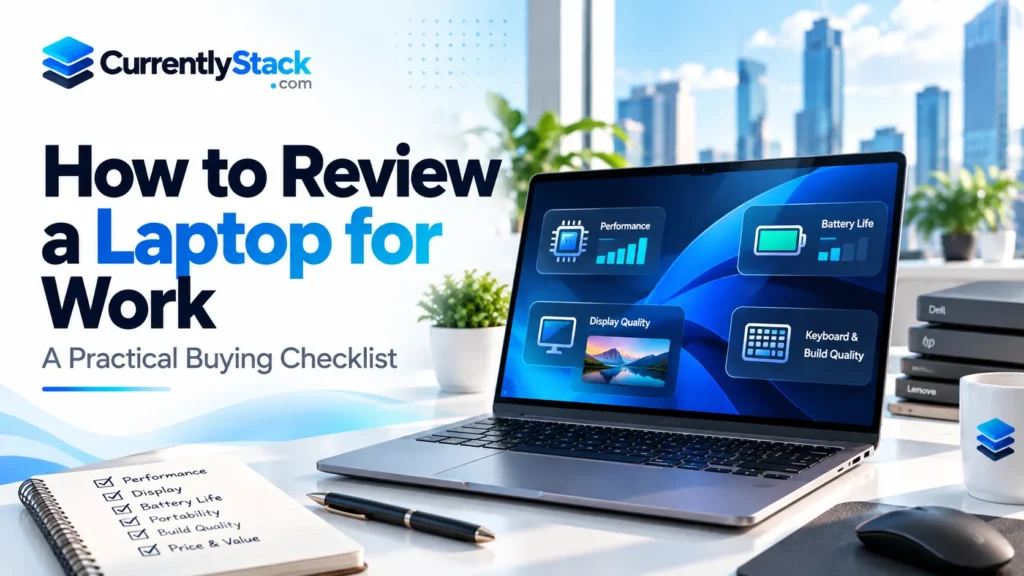
A laptop for spreadsheets and video calls has different requirements from a device used for software builds, 3D design or local machine-learning experiments. List the most demanding daily applications, required ports and the places you work. Avoid buying a premium specification only because it looks impressive in advertisements.
Performance should be tested in context
Processor names and advertised benchmark scores are only part of the story. Sustained performance can be affected by cooling, power limits and memory capacity. Look for independent tests that use tasks similar to yours, such as exporting video, compiling code or handling multiple browser tabs.
Think about RAM and storage lifespan
Choose enough memory for current work and likely future software needs, particularly when the device cannot be upgraded. Consider storage space for offline files, creative assets and backups. A fast drive does not compensate for insufficient memory when many applications are open.
Inspect the screen and keyboard
Display size, brightness, glare, contrast and text rendering affect comfort over long sessions. Try the keyboard and trackpad if possible; reviews cannot fully predict individual typing preferences. People who spend hours reading and writing should prioritize ergonomics over thinness alone.
Check mobility and connectivity
Manufacturer battery-life claims use different test conditions. Read tests covering mixed browsing, calls and realistic brightness. Consider weight, charging compatibility, Wi-Fi reliability, external displays, webcam quality and repairability.
Compare total ownership cost
Include warranty coverage, local service support, accessories, software, insurance and likely repair costs. A slightly more expensive device may be cheaper over its useful life if support and reliability are materially better.
Our review methodology
This is a buyer’s evaluation framework, not a hands-on review of a particular laptop. CurrentlyStack should reserve product ratings and performance verdicts for models that its editors have actually tested or for clearly attributed independent evidence.
Key takeaway
Use this framework as a starting point, then adapt it to your organization, budget and risk tolerance. For more practical technology coverage, explore related articles on CurrentlyStack.